
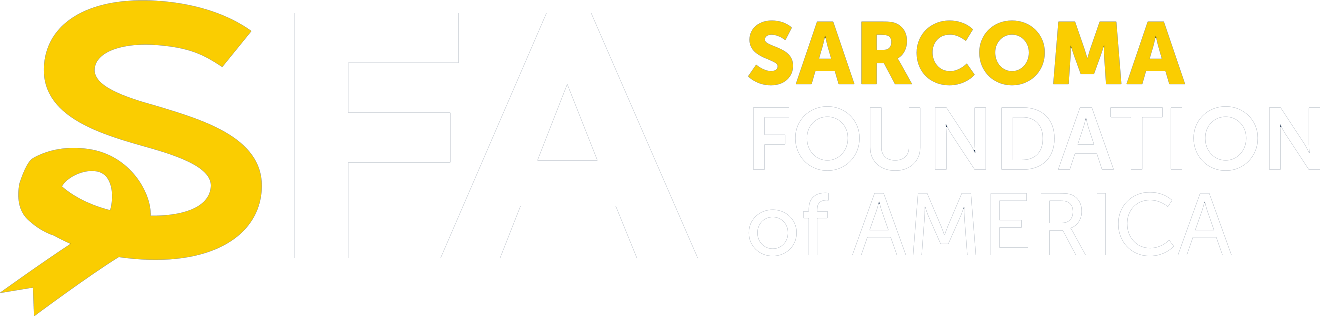
- $10 M
- $1 M
- $100 K
- $10 K

Funding Opportunities
A broad list of sarcoma research funding opportunities to make it easier for researchers to find opportunities that advance their work. Learn more about research grant deadlines and how to apply for a SFA grant.
View All Funding Opportunities
Latest Sarcoma Research

IMMUNOSARC II Master Trial: Phase II Study of Sunitinib and Nivolumab in Clear Cell Sarcoma Cohort
Based on a previous clinical trial researchers expanded the study of a combination of drugs in the ultra-rare sarcoma called Clear Cell Sarcoma. In this Phase II clinical trial, they treated patients who were confirmed to have Clear Cell Sarcoma and were 12 to 80 years old with the combination of sunitinib, which is a drug that selectively block proteins called tyrosine kinases, and nivolumab, which releases the brakes that tumors put on patients’ immune system by blocking a protein called PD-1 receptor on a specific type of immune cells called T cells. The primary end point was the 6-month progression free survival (PFS) rate with goal of having at least 10 of 23 patients’ progression-free at 6 months. Twenty three patients were evaluable for the primary end point at the cutoff. With a median follow-up of 23.0 months, the 6-month PFS rate was 50.1% with a median PFS of 6.2 months. Additionally, of the 21 patients who underwent at least 1 radiological assessment, 3 (14.3%) had a partial response, 14 (66.7%) had stable disease, and 4 (19.0%) had progressive disease. The median overall survival was 17.0 months. Additional analysis indicated that an increased expression of PD-1 was associated with better PFS. Conclusions: Additional studies are required, but these results indicate that nivolumab plus sunitinib could be useful Clear Cell Sarcoma management.
Read the full study in Cancer Communications.
Trastuzumab Deruxtecan Is Active in Desmoplastic Small Round Cell Tumor
Investigators used an antibody drug conjugate (ADC) called fam-trastuzumab deruxtecan (T-DXd), in which an antibody to HER2 (trastuzumab) is chemically linked to an inhibitor of a protein called topoisomerase (deruxtecan) which can kill the tumor cells. The ADC allows the deruxtecan to be targeted to the tumor increasing the concentration in the tumor while decreasing the side effects to the patient.
In this small study, the tumors of 19 DSRCT patients with DSRCT were tested by two method for HER2 expression when possible and received off-label T-DXd. Results indicate that 9 of 17 patients with measurable disease had a partial response by RECIST criteria and the other 8 patients had stable disease. However, the responses did not correlate with either of the HER2 test results indicating that these tests are not a good biomarker for response to this drug. These data are early and additional studies are needed and underway, but they indicate that TDXd may be a viable option for treatment in DSRCT.

Safety And Efficacy Of Combination Lurbinectedin Plus Doxorubicin From A Phase 1b Trial In Patients With Advanced/Metastatic Soft Tissue Sarcoma.
In this study, patients with advanced/metastatic soft tissue sarcoma were treated with lurbinectedin (binds to DNA inhibiting transcription and causing double strand DNA breaks) and doxorubicin (inserts into the DNA also inhibiting transcription) to determine the recommended phase 2 dose of full-dose lurbinectedin with low-dose doxorubicin. The treatment was also found to be safe and tolerable. There were several subtypes enrolled with signals of activity in leiomyosarcoma (LMS), Dedifferentiated Liposarcoma (DDLPS), undifferentiated pleomorphic sarcoma (UPS), endometrial stromal sarcoma, and myxofibrosarcoma with an objective response rate (ORR) of 60% and estimated median PFS of 16.5 months. These data support the ongoing randomized phase 2 study in patients with LMS comparing lurbinectedin/doxorubicin with doxorubicin alone.